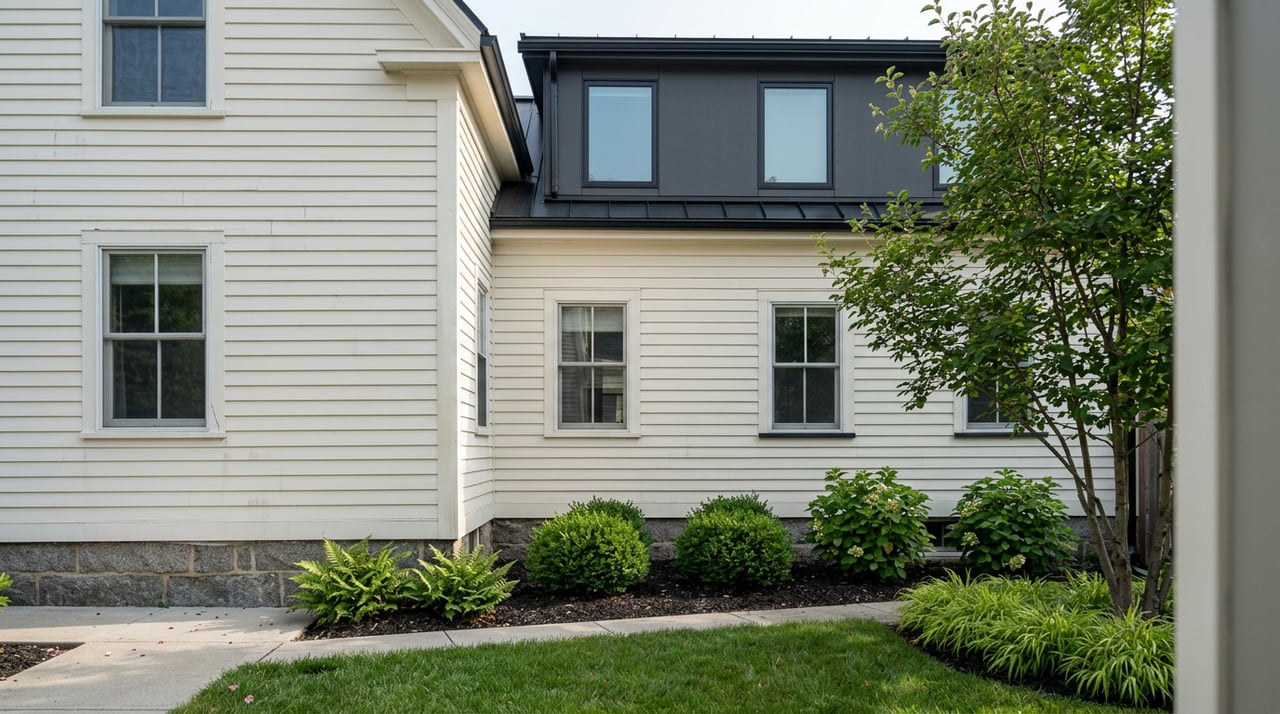
A seller with a house built in 1910 usually assumes the fire inspection will be the easy part of closing. Old house, lenient standard, battery-powered detectors, no wiring required. That assumption fails more often in Medford than in most Massachusetts cities, and Quincy's smoke and carbon monoxide detector page explains that a permitted renovation or addition can trigger an order to upgrade the smoke detection system for the whole dwelling.
Which smoke detector standard applies depends on construction date and, for older homes, whether a qualifying later permit changed the applicable standard. In a city where old housing stock is quietly getting modernized one permit at a time, that distinction is the difference between a fifteen-minute inspection and a wiring project you didn't budget for.
The certificate checks your paperwork, not your house
Massachusetts law requires a Certificate of Compliance from the local fire department before any one- or two-family home can be sold or transferred, under Massachusetts General Law chapter 148, sections 26F and 26F½. The state's own consumer guide lays out the placement and equipment rules by construction era, and the Mass.gov inspection prep page walks sellers through finding their build date and permit history before scheduling.
Here's the part that trips up owners of older Medford homes. Under the state building code, a permitted renovation or addition can trigger an order to upgrade the smoke detection system for the whole dwelling, not just the room where the work happened.
The practical differences are real. Homes built before 1975 can still use battery-powered detectors, placed outside each bedroom and on every level. Homes built after 1975 need hardwired, interconnected alarms throughout, with a detector inside each bedroom rather than just in the hallway outside it, as LegalClarity explains. Any detector within 20 feet of a kitchen or a bathroom with a tub or shower has to be photoelectric, regardless of era, because ionization units are prone to false alarms from steam and cooking smoke.
| Scenario | What decides the standard | What's required |
|---|---|---|
| Built before 1975, no permits since | Original construction date | Battery-powered alarms allowed, one per level, outside each bedroom |
| Built after 1975 | Construction date | Hardwired, interconnected, battery backup, one inside each bedroom |
Carbon monoxide alarms run on a separate but related track under section 26F½, sometimes called Nicole's Law. Any home with fuel-burning equipment, an oil furnace, a gas stove, a wood stove, or an attached garage needs a CO alarm within ten feet of each bedroom door, as LegalClarity explains, whether or not the house is being sold.
Why this lands harder in Medford than in newer suburbs
Housing age data compiled by NeighborhoodScout shows Medford's stock is 48.85 percent pre-1939 construction, with duplexes and converted apartments making up 34.24 percent of housing units citywide. That is a lot of original pre-code framing still standing.
It is also a lot of framing that keeps getting touched. Renovation activity near the Green Line Extension stations has picked up, and it shows up in listing after listing: full gut rehabs, new dormers, additions built to take advantage of what a station-adjacent lot is now worth. We wrote about how the Green Line Extension split Medford's market into two very different submarkets. The same construction boom that reshaped pricing near the stations is also quietly resetting smoke detector requirements on houses whose owners still think of them as "the old house on the corner."
The math is simple. A city with this much pre-1975 stock, combined with a rising share of that stock getting permitted work, produces more sellers than usual who assume they qualify for the lenient standard and don't. Nobody checks a smoke detector permit history for fun. Most people find out during listing prep, or worse, during the inspection itself.
A house doesn't get older every year. Its permit file does.
The 60-day clock that outlasts a lot of deals
Once your home passes inspection, the fire department issues a Certificate of Compliance valid for 60 days from the date it's signed. You may run across other sources citing six months. The official municipal pages consistently say 60 days, and that's the number to plan around.
Sixty days sounds like plenty of runway until a financing delay, an appraisal gap, or a title issue pushes your closing back. Sellers who schedule the inspection the moment they list, thinking earlier is safer, sometimes find themselves needing a paid re-inspection because the deal that was supposed to close in 45 days took 75. The safer play is scheduling once you have a signed purchase and sale agreement with a real closing date, timed so the 60-day window comfortably covers it.
What it costs, and who to call
Medford's Fire Prevention division handles inspections and can be reached at (781) 396-9831, through the Medford Fire Department at 120 Main Street. The department's own page references a 2010 code change affecting smoke detector requirements, a reminder that the rules you remember from a previous sale may not be the rules in effect now.
Medford hasn't published an exact fee schedule online as of this writing, so calling ahead to confirm your cost is worth the five minutes. The structure used by dozens of Massachusetts fire departments, including several neighboring communities, runs $50 for a single-family inspection, $100 for a two-family, $150 for three to six units, and $500 for seven units or more, according to Chelmsford's Smoke Detector Inspections page. If you're selling a two- or three-family, budget for the higher tier and factor it into your closing costs.
To check your own permit history before you call, Medford's Building Department maintains a searchable online record of past and present permits. Pull that history first. It tells you exactly what the fire inspector will be looking at.
A pre-listing checklist for Medford sellers
- Search your address in Medford's online permit records.
- If you find a qualifying permit, plan for any required upgrades.
- Check placement against your home's actual standard. Post-1975 stock needs an alarm inside each bedroom, not just in the hallway.
- Confirm any photoelectric requirement within 20 feet of a kitchen or a bathroom with a tub or shower.
- Check the manufacture date on every unit.
- Call Medford Fire Prevention at (781) 396-9831 once you have a signed purchase and sale, and time the appointment so the 60-day certificate window covers your expected closing date.
- For multi-family listings, confirm the per-unit fee tier and add it to your seller net sheet early.
FAQ
Does this apply if I'm selling a condo? The statute is written for one- and two-family homes, so ask your condo association or property manager which office handles your building.
What if I'm transferring the house to a family member instead of selling it? The law covers sale or transfer, not just arm's-length sales. A deed transfer to a relative still requires the certificate before it can be recorded.
What happens if the inspection fails? The department documents what needs correcting, and once it's fixed, a re-inspection gets scheduled. That resets your timeline and can strain a closing already running close to the 60-day certificate window.
Does a permit unrelated to bedrooms, like a new furnace or an electrical panel, ever trigger the upgrade? It depends on the scope of the work. The determination comes from the fire inspector reviewing your specific permit file. Asking directly beats assuming.
Permit history isn't something most sellers think to check before they list, and it's exactly the kind of detail that turns into a closing delay when nobody looks until the week of the appointment. If you're weighing a sale in Medford, especially a multi-family or a home with any renovation history, Encompass Property Solutions can help you pull that history early and build a listing timeline around it. Schedule a consultation and we'll walk through your specific permit file before it becomes a surprise.
This article is general information, not legal, tax or financial advice. Consult a qualified professional about your situation.